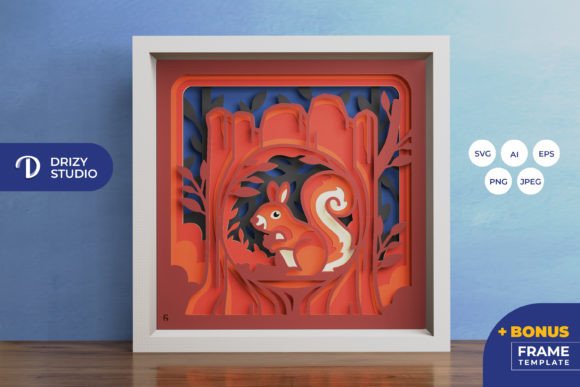
Squirrel on Tree Trunk 3D SVG for Shadow Boxes
Evaluating Whimsy for a Boutique Brand Identity Project
When reviewing a new graphic design asset for a client project, my first question is always about emotional resonance before technical specification. I recently evaluated the Squirrel on Tree Trunk 3D Layered file while developing a visual identity for "The Foraged Home," a small business specializing in artisanal preserves and nature-inspired home goods. The client needed a centerpiece graphic that felt handcrafted yet polished enough for retail packaging. My initial impression of this asset was positive; it successfully bridges the gap between rustic charm and structured modern design. Unlike flat vector illustrations that can sometimes feel sterile, this layered composition offers immediate tactile depth. It evokes a sense of nostalgia and organic warmth, making it an ideal candidate for brands targeting audiences who value sustainability, cottagecore aesthetics, and handmade authenticity.
For designers working in the creative marketplace, finding assets that translate well across both digital and physical mediums is rare. This specific squirrel illustration possesses a narrative quality that static clipart often lacks. The interplay between the animal and the tree trunk creates a natural frame, suggesting movement and life rather than just serving as a decorative afterthought. In the context of small business branding, this level of detail helps establish visual trust. It signals to the consumer that the brand cares about craftsmanship, which is essential when selling premium handmade products or curated lifestyle goods.
Translating Layered Depth Across Digital and Physical Media
The true test of any SVG design is its versatility. During the concept phase for The Foraged Home, I utilized the Squirrel on Tree Trunk 3D Layered asset in three distinct applications to gauge its performance. First, we explored its potential for packaging design. As a label accent on glass jam jars, the intricate lines of the paper-cut style provided necessary texture without overwhelming the product photography. The organic curves of the squirrel’s tail complemented the serif typography chosen for the brand name, creating a cohesive visual hierarchy.
Secondly, I tested the asset for social media graphics and Pinterest marketing. Here, the square format of the original template proved advantageous. It fits perfectly into Instagram carousels and Pinterest pins without requiring extensive cropping or resizing. When used as a hero graphic for a seasonal autumn campaign, the depth inherent in the 3D layering allowed us to cast subtle drop shadows in post-production, enhancing the dimensional effect even on flat screens. This makes it a valuable digital product for content creators who need engaging visuals that stop the scroll.
Thirdly, and perhaps most relevant to the product's core description, is its application in Shadow Boxes. For clients offering personalized gifts or event decor, this 3D SVG serves as a production-ready blueprint. The separation of layers allows Cricut and Silhouette users to cut individual elements from different cardstock weights and colors. I found the spacing between the squirrel and the trunk to be generous enough to prevent tearing during cutting, which is a common failure point in lesser-quality Cricut projects. This reliability makes it a strong contender for Etsy sellers focusing on papercrafts and light box art.
Strategic Placement: Maximizing Impact While Avoiding Visual Clutter
While the Squirrel on Tree Trunk 3D Layered asset is robust, it requires strategic placement to maintain professional standards. It excels in large layout areas where its details can breathe. Use it as a primary focal point on tote bags, wall art prints, or the front cover of editorial publications. In these contexts, the complexity of the paper-cut style adds richness and perceived value. It also functions beautifully as a supporting element in Canva templates for wedding invitations or baby shower stationery, where the woodland theme supports the celebratory mood without dominating the text.
However, designers must exercise caution when integrating this asset into minimalist or corporate environments. Due to its high level of detail and inherent whimsy, it clashes with strict grid systems or ultra-modern tech branding. I would advise against using this specific illustration for financial services, medical clinics, or luxury fashion brands unless the aesthetic is intentionally subversive. Furthermore, avoid placing this asset on busy photographic backgrounds. The intricate edges of the paper-cut style will get lost against complex textures, reducing readability and muddying the brand identity. It performs best against solid colors, subtle gradients, or natural wood grain textures that echo its organic origins.
Size is another critical constraint. This asset should not be scaled down below two inches in width for print applications. At smaller sizes, the delicate inner cuts of the squirrel’s fur and the bark texture will merge into indistinguishable blobs, especially in sublimation design or screen printing. If your project requires a tiny icon or favicon, opt for a simplified silhouette instead. Reserve this detailed illustration for moments where you want the viewer to linger and appreciate the artistry.
Technical Pre-Flight Checks for Commercial Design Success
Before committing this asset to a final client deliverable, professional due diligence is mandatory. As with any commercial design workflow, I recommend running a series of stress tests. Start by converting the file to black and white. Does the squirrel still read clearly against the tree trunk without color contrast? If the shapes rely entirely on color differentiation rather than value contrast, the design may fail in single-color embroidery or vinyl cutting scenarios. A strong printable design must hold up in monochrome.
Next, verify the file integrity. Open the SVG design in vector software like Adobe Illustrator or Affinity Designer to ensure all paths are closed and nodes are optimized. Stray anchor points can cause jagged cuts in automated manufacturing. If you are using the PNG version for web design or digital ads, inspect the transparency mask closely. Ragged edges or white halos around the subject look unprofessional on dark backgrounds and undermine the premium feel of the asset. Clean edges are non-negotiable for product mockups intended to showcase print-on-demand merchandise.
Typography pairing is equally important. Test the asset alongside various font families. I found that it pairs exceptionally well with textured serifs and flowing scripts, reinforcing the handmade narrative. Conversely, geometric sans-serifs created a jarring disconnect that felt unintentional rather than eclectic. Always confirm the commercial license terms before using this in a design bundle or for client work. Understanding whether you can use the asset for end-products versus digital redistribution protects both your business and the original creator. Finally, always print a physical proof at actual size before approving a t-shirt design or sticker run. Screen resolution lies; ink on paper tells the truth about line weight and negative space. By treating this Squirrel on Tree Trunk 3D Layered asset with the same rigor as custom-drawn artwork, designers can elevate it from a simple download to a cornerstone of sophisticated marketing visuals.