St Patrick Shamrock 3D Layered Paper Cut Review
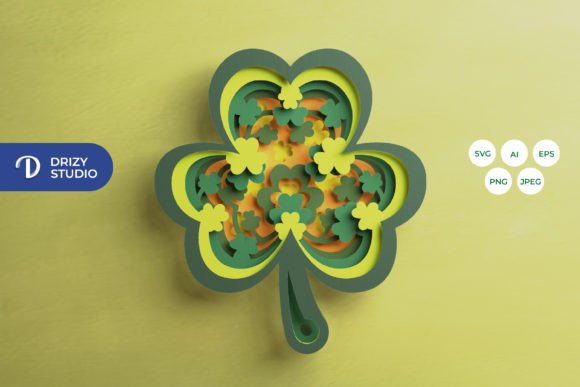
As a designer who constantly bridges the gap between digital assets and tangible textiles, I approach every new file with a healthy dose of skepticism. When I first opened the St Patrick Shamrock 3D Layered Paper Cut, my immediate thought was about translation. This asset is categorized under Shapes and marketed as a 3D SVG, primarily intended for paper crafting. However, for those of us in the embroidery and apparel decoration space, the real question is always: will this actually stitch out well? After evaluating the geometry and layering logic of this design, I see significant potential for mixed-media projects and textured embroidery, provided you understand its origins.
Translating Paper Logic to Thread Reality
The visual personality of this machine embroidery design candidate is distinct. Unlike traditional digitized shamrocks that rely on complex fill stitches or satin borders, this template uses layered geometry to create depth. In paper cutting, depth is achieved through physical spacing; in embroidery, we must simulate this through fabric texture and appliqué techniques. The mood is modern and architectural rather than folk-art traditional. It feels crisp, intentional, and contemporary, making it an excellent fit for boutique branding or elevated holiday merchandise rather than rustic farmhouse decor.
For an Etsy seller or small shop owner, this aesthetic is valuable because it stands out in a saturated market. Most St. Patrick’s Day listings feature identical, dense-fill clovers. This layered approach offers a cleaner, more graphic silhouette that reads beautifully in printable mockups and translates to a sophisticated finished product. However, because this originated as a paper cut template, you cannot simply send it to your machine. You must treat it as a structural blueprint for creating an applique design or a raw-edge layered textile piece.
Real-World Application: The Structured Tote Bag
To truly test the viability of the St Patrick Shamrock 3D Layered Paper Cut, I evaluated it for a specific client request: a premium canvas tote bag for a local Irish heritage festival. The client wanted something that felt handmade but polished, avoiding the cheap look of mass-produced holiday gear. This design was ideal for this tote bag design application because the layered nature mimics the durability needed for heavy-use items.
In this scenario, I envisioned using three shades of green cotton linen rather than thread alone. The bottom layer would be a deep forest green, the middle a vibrant kelly green, and the top a lighter mint. By using the SVG lines as cutting guides for fabric pieces, we create a physical 3D effect that thread density struggles to replicate without becoming bulletproof. For the embroidery project, I would use a minimal running stitch to tack down the edges, embracing a raw-edge appliqué style. This keeps the stitch density low, preserving the drape of the canvas and reducing production time. Customers at craft fairs respond to this tactile quality; they want to touch the layers. It transforms a standard holiday embroidery item into a high-value handmade product that justifies a higher price point.
Navigating Fabric Limitations and Hoop Constraints
While the design is versatile, its geometric precision demands respect. You must be cautious when applying this to stretchy or unstable fabrics. Because the St Patrick Shamrock 3D Layered Paper Cut relies on clean, stacked lines, any fabric distortion will ruin the illusion of depth. I would avoid using this on lightweight jersey knits or ribbed baby clothes unless heavily stabilized. For baby embroidery, the multiple layers could become too bulky and uncomfortable against sensitive skin. Instead, reserve this for stable substrates like denim, canvas, twill, or felt.
Hoop size selection is equally critical. Paper cut designs often have intricate internal corners that can get lost if scaled down too aggressively. If you are attempting sweatshirt embroidery or working on a curved surface like a cap, simplify the layers. A full three-layer stack might pucker on a curved brim. In those cases, reduce it to two layers or use the innermost shape as a standalone patch. Always verify the final dimensions against your hoop capabilities before committing to a production run. Remember, what works as a 6-inch paper art piece may fail as a 2-inch embroidered accent due to loss of detail.
Commercial Value and Brand Consistency
For creative entrepreneurs, consistency builds trust. Using a unique asset like this 3D SVG helps establish a recognizable brand voice. When customers see your work, they should associate that clean, layered aesthetic with your shop. This design supports that recognition across various mediums. It works as a focal point on an apron, a subtle pocket detail on a shirt, or even as a standalone embroidered patch sold separately.
However, commercial viability also depends on licensing and technical verification. Since this is described as a paper-cutting template, you must confirm whether the license permits derivative commercial embroidery products. Never assume a digital file is cleared for resale just because you purchased it. Additionally, check if the vector nodes are optimized for fabric cutting machines or laser cutters if you plan to automate the appliqué prep. Efficient workflow is key for any craft business. If you have to manually redraw every line to make it stitch-ready, factor that labor cost into your pricing.
Essential Designer Notes for Success
Before you load this design into your software or cutter, adhere to these practical protocols to ensure professional results:
- Test on Scrap Fabric First: Never run a new layered design on a final garment. Test the alignment and layer thickness on a scrap of your exact project fabric with your chosen stabilizer.
- Evaluate Thread Color Contrast: If stitching outlines, ensure high contrast between the thread and each fabric layer. Low contrast hides the 3D effect and makes the design look muddy.
- Check Stitch Density: If converting to full embroidery, manually adjust density. Paper templates do not account for thread buildup. Overlapping layers of satin stitch will cause needle breaks and fabric tearing.
- Mockup in Black and White: Before choosing thread colors, view the design in grayscale. This reveals whether the value structure holds up without relying solely on color differences.
- Verify Licensing: Explicitly check the terms regarding digital embroidery file redistribution versus finished physical product sales. Protect your business by knowing your rights.
- Consider Washing Requirements: Raw-edge appliqué derived from paper cuts may fray over time. If the item requires frequent washing (like kitchen towels), add a denser border stitch or fuse the layers securely.
Final Thoughts on Versatility
The St Patrick Shamrock 3D Layered Paper Cut is more than just a seasonal novelty; it is a structural tool for makers willing to adapt digital concepts into textile reality. It challenges us to think beyond standard fills and embrace construction as decoration. Whether you are creating a personalized gift for a friend or stocking your Etsy shop for March, this design offers a pathway to distinctive, professional results. Just remember to honor the material constraints, validate your technical specs, and let the layered geometry guide your creativity toward something truly tangible.