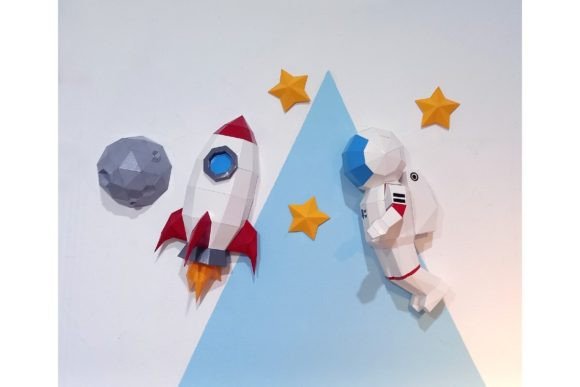
3D Papercraft Astronaut & Rocket: A Space 3D SVG Review
As a brand designer constantly sourcing assets for client campaigns, my first impression of the 3D Papercraft Astronaut and Rocket was immediate: this is not just a decoration; it is a versatile narrative tool. The low-poly aesthetic bridges the gap between playful nostalgia and modern geometric design. When evaluating this graphic design asset for a recent educational tech launch, I found that the polygon art style communicates creativity and approachability far better than sterile, realistic space imagery. It creates a mood of imaginative exploration rather than cold scientific precision, making it exceptionally suitable for brands targeting families, educators, or creative entrepreneurs who want to signal innovation without intimidation.
Elevating Campaign Visuals Beyond Generic Clipart
In a real-world marketing scenario, we were tasked with refreshing the visual identity for a STEM subscription box service. Standard stock photos felt impersonal, and flat vector illustrations lacked depth. Integrating the 3D Papercraft Astronaut and Rocket as a central motif transformed our social media graphics. Because this asset mimics physical paper construction, it adds a tactile quality to digital screens. This texture is crucial for stopping the scroll on platforms like Instagram and Pinterest. Unlike generic clipart, the faceted surfaces catch light and shadow, creating natural focal points that guide the viewer’s eye toward headlines and call-to-action buttons.
For brand identity work, this asset performs best when treated as a modular element. We used the rocket as a recurring icon in email headers and the astronaut as a mascot for blog features. This consistency builds audience trust by creating a cohesive visual language. The 3D SVG format proved invaluable here; scaling the asset from a tiny favicon to a massive website hero banner resulted in zero pixelation, ensuring professional branding across all touchpoints. For small business owners managing their own Canva templates, this scalability means one purchase covers everything from business cards to billboard-sized promotional banners.
Strategic Applications for Digital and Print Media
The versatility of this design bundle extends well beyond social feeds. During our campaign testing, we identified several high-impact applications where the papercraft aesthetic outperformed traditional photography:
- Packaging Design: The geometric lines complement kraft paper and matte finishes perfectly, adding a premium handmade feel to unboxing experiences.
- Editorial Design: As a spot illustration in newsletters or magazines, the white space inherent in the polygon structure prevents page layouts from feeling cluttered.
- Digital Ads: The distinct silhouette ensures readability even at thumbnail sizes, which is critical for Facebook and Google display networks.
- Lead Magnets: Using the astronaut on PDF covers for checklists or guides signals value and creativity, increasing download conversion rates.
- Merchandise: The stylized nature translates beautifully to stickers and enamel pins, turning marketing visuals into tangible brand ambassadors.
Each application leverages the unique "crafted" emotion of the asset. In content marketing, emotional resonance drives engagement. A polygon astronaut feels like something a human made, fostering a deeper connection than AI-generated smoothness or corporate sterility. This is particularly effective for coaches and creators building personal brands around authenticity and hands-on learning.
Navigating Limitations and Contextual Fit
Despite its strengths, the 3D Papercraft Astronaut and Rocket requires strategic placement. It is not a universal solution. I advise against using this asset for formal corporate finance, legal services, or luxury fashion brands where the whimsical geometry might undermine authority. Furthermore, because polygon art relies on contrast between facets, placing it on busy photographic backgrounds can destroy the visual hierarchy. It demands negative space to breathe.
Designers must also be cautious with mobile optimization. While the SVG design scales infinitely, the intricate folds can become visually noisy if reduced below 100 pixels wide. Always preview your web design implementations on actual devices. Additionally, avoid pairing this asset with overly complex script fonts. The angular nature of the papercraft clashes with organic curves; instead, opt for clean sans-serifs or bold display typefaces that mirror the geometric confidence of the illustration. If your layout is text-heavy, use the asset as a subtle watermark or border element rather than a centerpiece to prevent competing with your core message.
Technical Due Diligence for Commercial Success
Before deploying any digital product in a paid campaign, rigorous testing is non-negotiable. My team ran the 3D Papercraft Astronaut and Rocket through a comprehensive brand safety checklist. First, we tested color adaptability. Since many polygon files come pre-colored, verify that the hues align with your brand palette or that the file allows for easy recoloring in Illustrator or Figma. We also tested monochrome usage; a strong printable design must hold up in black and white for receipts, thermal labels, or accessible document formats.
Licensing is the most critical commercial consideration. Always confirm the commercial license terms before using the asset in client work or for-sale products. Some creative marketplace listings restrict use in end-products for resale, such as printed t-shirts or digital planner stickers. Ensure your license covers your specific business model. Finally, test the asset against competitor visuals. If every other space-themed brand in your niche uses similar low-poly astronauts, you may need to customize the asset significantly to maintain distinctiveness. True modern design isn't just about downloading a trendy file; it's about adapting that file to serve your unique strategic goals.
Final Verdict for Creative Entrepreneurs
Ultimately, the 3D Papercraft Astronaut and Rocket is a robust addition to any creative entrepreneur's toolkit. It solves the common problem of finding Space themed imagery that feels warm and human-centric. Whether you are designing a product label for a children's vitamin line or creating an engaging header for a coaching webinar, this asset offers a balance of professionalism and playfulness that is hard to achieve with standard stock libraries.
For bloggers and publishers, it provides a consistent visual anchor that ties disparate content pieces together. For digital sellers, it serves as a high-value component in larger design assets bundles. The key to maximizing its ROI lies in intentionality. Do not simply paste it onto a canvas because it looks cute. Use it to reinforce your brand's promise of creativity, exploration, and accessible innovation. When applied with strategic foresight, this polygon art transcends mere decoration and becomes a functional pillar of your visual communication strategy, driving both recognition and results in an increasingly crowded digital landscape.