Tree of Life Layered Scene: An Embroidery Review
As a professional designer who constantly evaluates digital assets for commercial viability, I approach every new file with a healthy dose of skepticism. When I first opened the Tree of Life Layered Scene, my immediate thought was about its origins as a 3D SVG intended for shadow boxes and cardstock layering. However, experienced makers know that the best embroidery projects often come from adapting designs outside their original medium. After reviewing the geometry and flow of this Tree of Life Layered Scene, I see immense potential for textile adaptation, provided you understand how to translate paper-craft logic into stitch logic.
Translating Paper Layers to Thread Texture
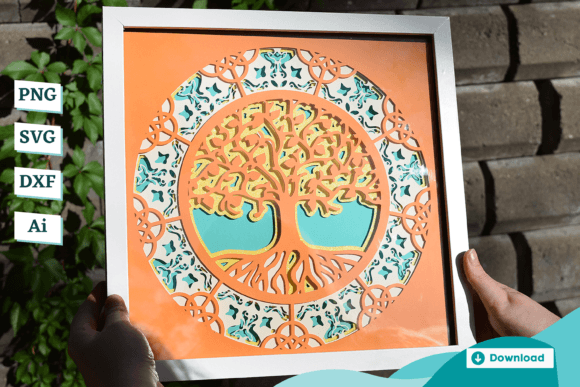
The visual personality of this design is organic, intricate, and deeply symbolic. It carries a mood of heritage and growth, making it naturally suited for heirloom-quality goods rather than fast fashion. In its native 3D SVG format, depth is achieved through physical spacing between paper layers. In embroidery, we must replicate this depth using stitch density and texture variation rather than physical gaps.
When evaluating this as a machine embroidery design, I look at how the branches interact. A layered paper scene relies on clean, sharp cuts. For embroidery, those same lines need to be interpreted as either crisp satin stitches or softer fill stitches to mimic the shadow effect. If you are planning to use this for a personalized gift or a boutique product, the design’s complexity suggests it will serve best as a centerpiece. It demands attention. This isn't a subtle logo placement; it is a narrative illustration that tells a story of connection and nature.
Real-World Application: The Custom Tote Bag Test
To truly judge the utility of the Tree of Life Layered Scene, I mentally placed it onto a heavy canvas tote bag project I recently scoped for a local botanical garden shop. Canvas is a forgiving fabric texture, but it can swallow fine details. Here is where the "layered" aspect becomes critical.
If I were stitching this out for that client, I would avoid treating it as a flat applique design. Instead, I would utilize the layering information from the original file to guide my digitizing or editing process. The background trunk might require a dense fill stitch to anchor the piece, while the upper foliage could utilize lighter running stitches or decorative fills to create the illusion of the 3D SVG depth. This approach transforms a flat embroidery file into a tactile experience. For an Etsy seller or small shop product, this level of intentionality is what justifies a higher price point. Customers aren't just buying a tree; they are buying the craftsmanship that makes the tree feel alive on the fabric.
Navigating Fabric Limitations and Hoop Sizes
While the aesthetic is versatile, the technical execution requires caution. Because this design originates from a layered template, the detail level can be deceptively high. I advise extreme care when considering this for stretchy fabrics like jersey knits or lightweight baby clothes. The structural integrity required to support a complex tree scene often necessitates heavier stabilizer, which can distort delicate garments or make them unwearable.
Furthermore, consider your hoop size limitations. Intricate branch work and tiny negative spaces that look beautiful in a vector file can become mud in a small embroidery hoop. If you are working with a 4x4 hoop, you may need to simplify the outermost layers of the Tree of Life Layered Scene to maintain stitch clarity. Always test on scrap fabric first. I have seen too many craft business owners ruin expensive blanks because they assumed a digital preview would translate perfectly to textured linen or dark denim without adjustment. Dark fabrics, in particular, require careful thread color contrast planning; the subtle layering effects visible on white cardstock may disappear entirely if stitched in low-contrast tones on navy or black material.
Commercial Viability for Makers and Sellers
For creative entrepreneurs and digital product sellers, the question is always: "Will this sell?" The Tree of Life motif is evergreen. It performs exceptionally well in specific niches:
- Holiday Embroidery: As a non-denominational winter symbol, it works beautifully for seasonal home decor.
- Wedding Gifts: Representing family roots and new growth, it is ideal for pillow covers or framed hoop art.
- Nursery Decor: When simplified and softened, it fits the "woodland" theme popular in baby embroidery markets.
- Boutique Branding: For eco-conscious brands, this design reinforces values of sustainability and nature.
However, professionalism dictates that you verify licensing before selling finished products or offering the digital embroidery file itself. Just because a 3D SVG is available does not automatically grant commercial embroidery rights. Protect your business by confirming these terms. Additionally, when creating printable mockups for your listings, ensure they accurately represent the stitch texture. Misleading customers with smooth vector graphics instead of realistic stitch simulations leads to returns and damaged trust.
Designer Notes for Successful Execution
Before you load this design into your machine, run through this practical checklist derived from years of production experience:
- Analyze the Source: Since this is adapted from a layered cardstock template, identify which layers should be foreground (satin/dense fill) and which should be background (lighter fill/running stitch).
- Stabilizer Strategy: Match your stabilizer to both the fabric weight and the stitch count. Complex layered scenes often require cut-away stabilizer even on stable fabrics to prevent puckering.
- Thread Color Testing: Do not rely on screen colors. Stitch out a color chart on your actual project fabric. The interplay of light and shadow in a layered scene depends entirely on tonal contrast.
- Detail Audit: Zoom in to 100% in your software. Are there gaps between layers that are too small to stitch cleanly? Merge or remove them. Are there jump stitches across open areas that should be trimmed manually?
- Wash Test: If this is for custom apparel or tea towels, wash your test sample. Intricate branch tips can fray if not properly secured with underlay stitches.
Elevating the Handmade Standard
The Tree of Life Layered Scene offers a fantastic foundation for high-value handmade products, but only if respected as a technical challenge as well as an artistic one. Whether you are creating a custom embroidered patch, a sweatshirt embroidery piece, or a cherished family heirloom, success lies in the translation. By acknowledging the design's roots in 3D SVG and shadow box construction, you can leverage its inherent depth to create embroidery that stands out in a saturated market.
Remember, high-quality designs are the key to every successful project, but the maker's judgment is what brings them to life. Take the time to test, adjust, and refine. Your customers will recognize the difference between a generic stitch-out and a thoughtfully executed work of art. Use this design not just as a pattern, but as an opportunity to demonstrate the superior quality and attention to detail that defines your brand.